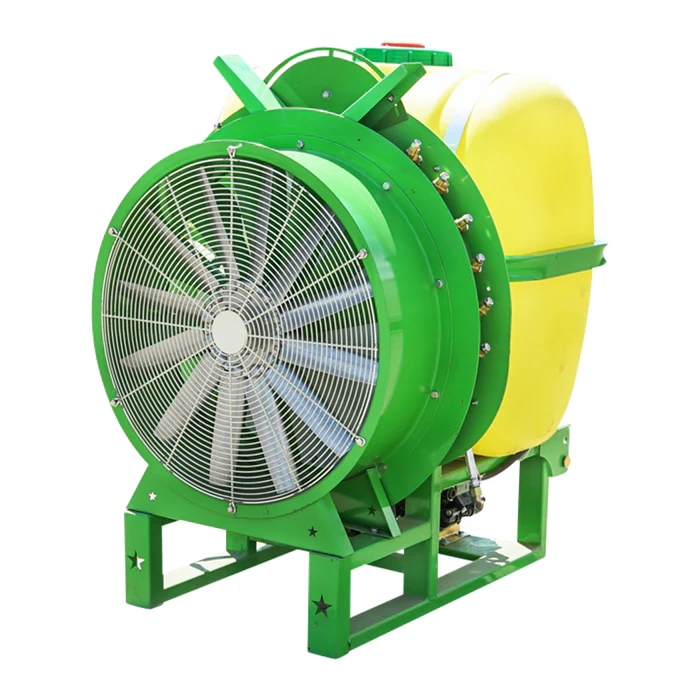

FASTMA® Air Blast Sprayer operation depends heavily on speed, airflow, nozzle output, and crop conditions. A small change in travel speed can alter how much spray reaches the target, how evenly the canopy is covered, and how much chemical is lost outside the intended area.
For many spraying operations, the first instinct is to focus on tank capacity or spray pressure. Yet travel speed is often overlooked. Moving too quickly can reduce coverage before the operator notices a problem, while moving too slowly can increase the amount of spray applied to the same area. Neither situation necessarily means the machine itself is malfunctioning. The issue may simply be that the operating speed does not match the spray setup.
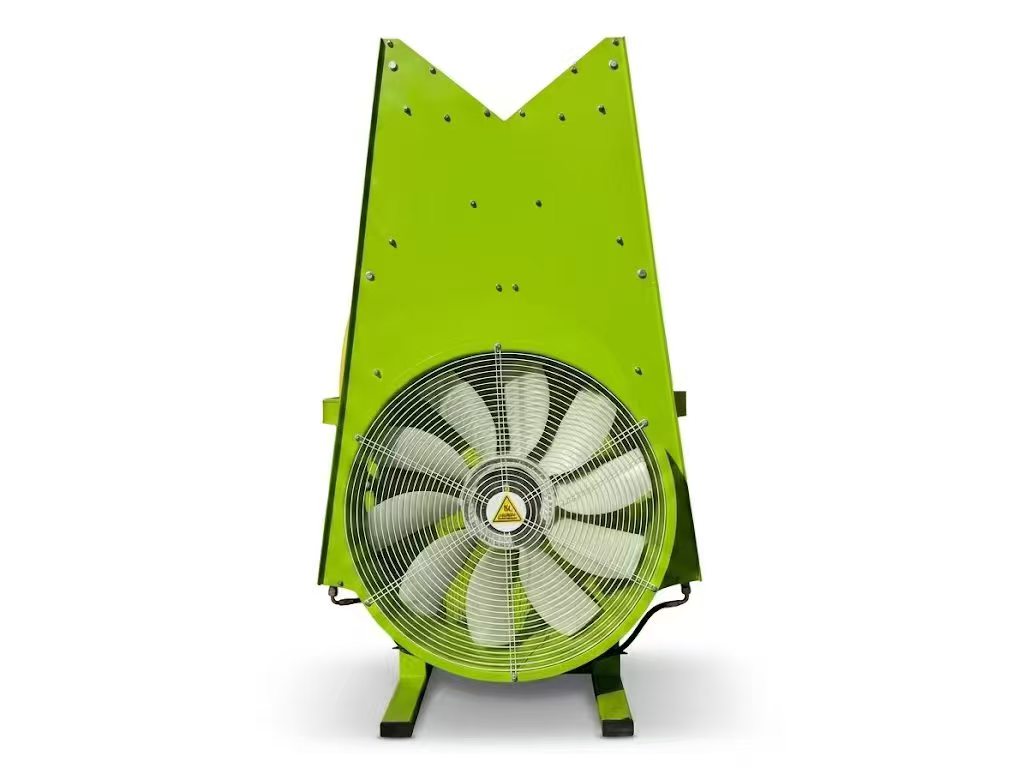
An air blast sprayer does more than release liquid through nozzles. It combines liquid spray with a strong airflow that helps carry droplets into dense vegetation. Because the machine is moving through the field or orchard at the same time, three factors are constantly interacting: application rate, airflow, and travel speed.
Imagine a machine applying a fixed amount of liquid per minute. If it moves faster, that same amount of liquid is distributed across a larger area. If it moves slower, the same liquid is concentrated over a smaller area.
The basic relationship is straightforward:
Application rate per area = spray output per minute ÷ travel speed
This means that changing speed without changing spray output changes the application rate.
| Operating Change | Likely Effect |
|---|---|
| Speed increases | Less liquid applied per unit area |
| Speed decreases | More liquid applied per unit area |
| Airflow too low | Poor penetration into dense foliage |
| Airflow too high | Greater risk of drift and off-target movement |
| Pressure increased without adjustment | Smaller droplets and potentially greater drift |
| Nozzle output unchanged while speed changes | Application rate changes |
The important point is that speed should not be considered separately from the rest of the spraying system.
High travel speed can appear attractive because more ground can be covered in less time. However, faster movement reduces the amount of time available for the spray cloud to interact with the crop canopy.
This becomes particularly important in orchards, vineyards, and other crops with dense foliage.
If the spray is released while the machine is moving rapidly, the airflow may not have enough time to carry droplets toward the inner parts of the canopy. The outer leaves can receive more spray than the interior, creating uneven distribution.
There is another problem: the operator may compensate for insufficient coverage by increasing pressure. This can produce smaller droplets, which are more easily carried away by wind and airflow. The result can be higher chemical loss rather than better penetration.
Slowing down is not automatically the solution.
At a lower speed, the machine spends more time beside the same crop area while continuing to discharge spray. If the spray output remains unchanged, the amount applied to each unit of land increases.
Excess application can lead to unnecessary chemical consumption and increased runoff from leaves. It can also make the operation less efficient because the additional spray does not necessarily produce better coverage.
This is why simply reducing speed whenever coverage looks weak can create another problem.
The correct operating point depends on the crop, canopy density, nozzle configuration, air volume, weather conditions, and target pest or disease.
The defining feature of an air blast sprayer is its use of air to transport spray droplets. That makes airflow just as important as liquid output.
Too little air may leave droplets concentrated around the outer canopy. Too much air can disturb foliage excessively and push droplets beyond the target area.
Travel speed changes the time available for this airflow to work. A slower machine gives the spray cloud more opportunity to enter the canopy, while a faster machine requires the airflow pattern to keep pace with the changing position of the crop.
This is particularly noticeable when crop rows become wider or canopy density changes during the growing season.
A setting that works well in a young orchard may not be appropriate when the foliage becomes dense several weeks later.
Usually, no.
Crop structure is one of the most important variables. Open vegetation requires a different spray pattern from a dense canopy. Row spacing also affects how close the machine is to the target.
Weather matters as well. Wind can change droplet movement, while hot and dry conditions can increase evaporation. Spraying under unsuitable weather conditions can reduce the amount of material reaching the intended surface regardless of how accurately the machine is adjusted.
Terrain should also be considered. On slopes or uneven ground, maintaining a constant travel speed can be more difficult. Frequent acceleration and deceleration may create variations in application.
For these reasons, operating speed should be treated as an adjustable working parameter rather than a fixed number.
Operators do not always need complicated calculations to identify a speed problem.
Start by checking the actual travel speed rather than relying on an estimated setting. Then compare it with the machine's liquid output and the area being treated.
A practical inspection can include:
Use the machine's speed display or another reliable measurement method. Small differences between the intended and actual speed can become significant across large fields.
Blocked, worn, or incorrectly selected nozzles can change liquid output. If one side of the machine delivers more or less liquid than the other, changing travel speed will not solve the underlying problem.
Look beyond the outer leaves. If spray reaches only the exposed surface while the interior remains poorly covered, airflow, nozzle direction, droplet characteristics, or speed may need adjustment.
Visible drift outside the crop indicates that spray movement is not fully controlled. Increasing pressure or airflow without identifying the cause can make the situation worse.
Spraying conditions change as crops develop. A setting used early in the season should not automatically be carried through the entire growing cycle.
The cost of incorrect speed is not limited to wasted liquid.
If the machine travels too quickly and coverage becomes inadequate, an operation may need to be repeated. That means another pass through the field, additional fuel consumption, additional labor, and additional machine operating time.
If the machine travels too slowly, excessive liquid may be applied without producing a proportional improvement in crop protection.
The real objective is therefore not simply to spray faster or slower. It is to match machine speed with the required application rate and canopy conditions.
Modern agricultural machinery can reduce manual workload, but operating decisions still matter.
An air blast sprayer can maintain a consistent spray pattern only when its major working parameters are correctly matched. Nozzle selection, liquid pressure, airflow direction, fan performance, travel speed, and crop structure all influence the final result.
For equipment used across different crops or seasons, adjustable settings are particularly important. A machine that can be configured according to field conditions is easier to adapt than one operated at a single fixed setting.
FASTMA® is part of Xingtai Farming First Agricultural Machinery Co., Ltd.'s agricultural machinery range, which includes spraying equipment such as boom sprayers, air blast sprayers, and hydraulic telescopic sprayers. The company's agricultural machinery production began in 2015, with its product range covering soil tillage, planting, plant protection, field management, and harvesting applications.
There is no universal travel speed that guarantees correct spraying in every crop and every field.
The better question is whether the selected speed matches the liquid output, airflow, crop structure, weather, and target area. If one of these changes, the operating setting may need to change as well.
For operators using an Air Blast Sprayer, checking speed together with airflow and nozzle output is a simple way to identify avoidable application losses. The same approach also helps prevent the opposite problem—slowing down and applying more chemical without improving coverage.
As agricultural spraying becomes more focused on accurate application and resource control, basic operating parameters remain important. Speed is one of them, and it is often easier to adjust than many operators expect.
For Xingtai Farming First Agricultural Machinery Co., Ltd. and its FASTMA® agricultural machinery range, the practical value of spraying equipment ultimately depends not only on the machine itself, but also on how its operating parameters are matched to real field conditions.