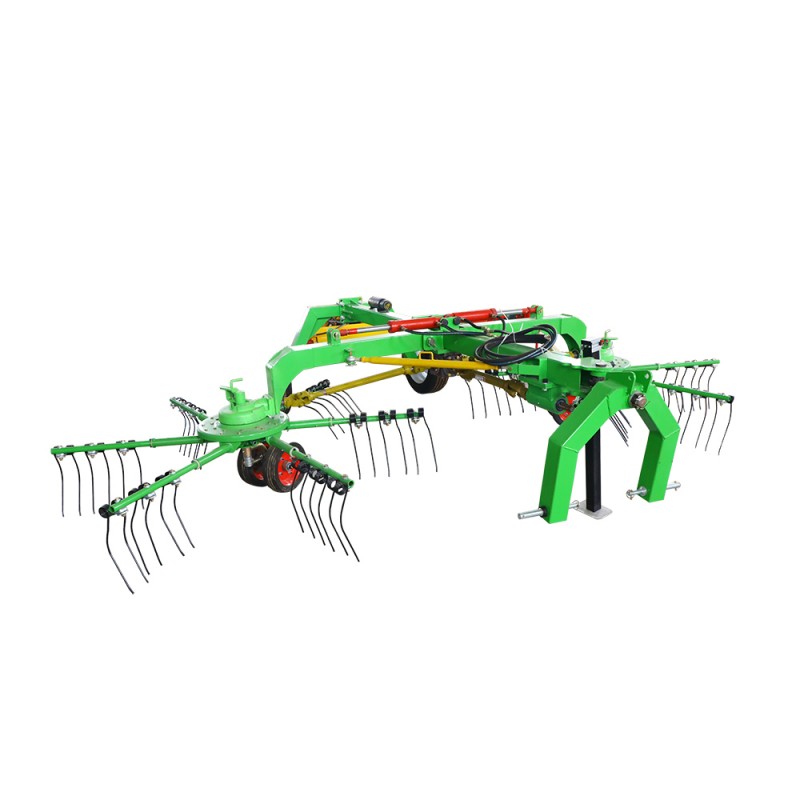

Article Summary: In today’s rapidly advancing world, technology continues to redefine the way we navigate and track our surroundings. Satellite Intelligent GPS systems have proven to be at the forefront of this revolution. This blog explores how Satellite Intelligent GPS technology works, its benefits, applications, and future prospects in various industries. From farming to logistics, Satellite GPS has become an indispensable tool for accurate tracking and navigation.

Satellite Intelligent GPS (Global Positioning System) technology has revolutionized the way we approach navigation, tracking, and mapping. Through a network of satellites, GPS systems offer precise positioning data, enabling everything from vehicle tracking to agricultural management. As we continue to rely more on digital solutions for logistics, safety, and efficiency, the importance of reliable GPS systems, such as those provided by FASTMA, becomes increasingly clear.
Satellite GPS systems rely on a constellation of satellites orbiting the Earth. These satellites transmit signals to GPS receivers on the ground. The receiver calculates the time it takes for the signals to reach it, allowing it to determine its exact position. The more satellites the receiver can communicate with, the more accurate the positioning data becomes. The satellite network ensures global coverage, making GPS a universal tool for tracking and navigation.
| Benefit | Description |
|---|---|
| Accuracy | Satellite GPS systems provide highly accurate positioning data, essential for navigation and mapping. |
| Global Coverage | GPS operates worldwide, making it an invaluable tool in remote or international locations. |
| Real-time Tracking | Satellite GPS enables live tracking, useful for applications like fleet management or personal navigation. |
| Cost Efficiency | Once set up, GPS systems are cost-effective and require minimal maintenance, saving money in the long term. |
As technology continues to evolve, the future of Satellite Intelligent GPS looks promising. Innovations in signal processing, integration with AI, and the potential use of new satellite constellations could significantly enhance the system's accuracy and capabilities. The integration of GPS with IoT (Internet of Things) devices, such as smart cars and smart cities, will open new frontiers in automated navigation and real-time data collection.
Satellite GPS systems are highly accurate, with some systems achieving accuracy within a few centimeters. However, the accuracy can vary depending on environmental factors such as weather conditions and satellite coverage.
Yes, Satellite GPS works globally, including in remote and rural areas, as long as there is line-of-sight to at least four satellites.
Satellite GPS is widely used in industries such as agriculture, logistics, military, transportation, and search and rescue. It also plays a significant role in personal navigation and the development of smart cities.
Unlike traditional navigation methods, such as paper maps or compasses, Satellite GPS provides real-time, precise positioning and navigation. It offers greater convenience and accuracy, even in unfamiliar or challenging environments.
Businesses can integrate Satellite GPS into their operations by using GPS-enabled devices for fleet tracking, asset management, or real-time navigation. You can also explore specialized systems tailored to your industry's needs, such as those offered by FASTMA.
Satellite Intelligent GPS is transforming the way we navigate, track, and manage various operations across industries. Whether you're in agriculture, logistics, or personal navigation, the accuracy and reliability of Satellite GPS are undeniable. As the technology continues to evolve, it holds great promise for the future, offering more integrated, efficient, and cost-effective solutions.
If you're interested in learning more about how Satellite GPS can enhance your operations, contact us at FASTMA for customized solutions that fit your specific needs. Let’s explore the future of navigation together!